“Time was going to pass regardless. You might as well do something that you want to do.”
It's a simple piece of advice that Vanessa Ayala often shares with others, but it is also a philosophy that carried her through nearly a decade at Roosevelt University, starting as an undergraduate student to eventually completing her doctorate, all while navigating an unexpected leukemia diagnosis that created a tremendous arch to her journey.
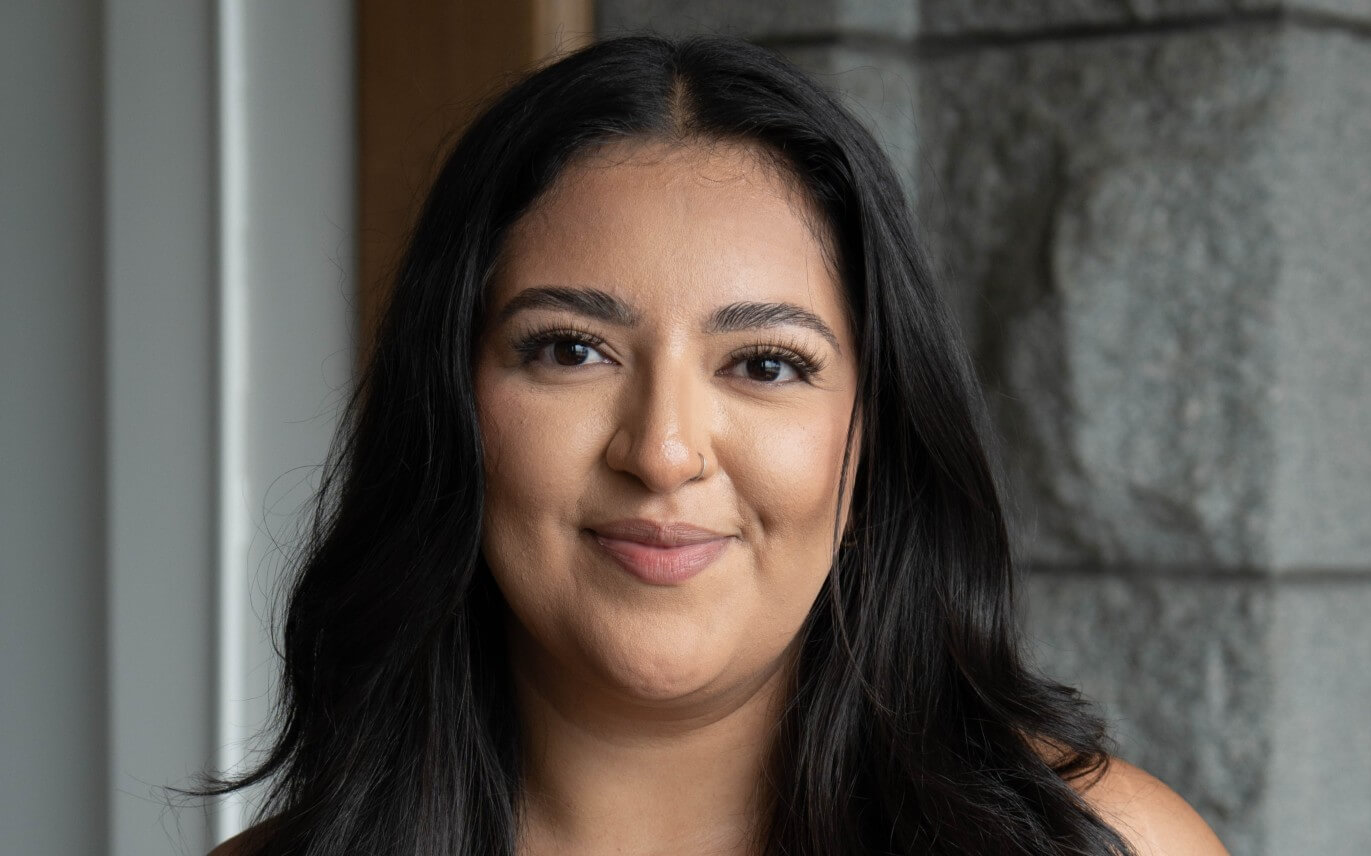
This August, Vanessa graduated from Roosevelt University's Doctorate in Clinical Psychology (PsyD) program and begin a postdoctoral fellowship in psychosocial oncology in Michigan. At just 27 years old and the first person in her family to attend college, she will be one step away from becoming a licensed clinical psychologist and bilingual (English and Spanish) provider, embarking on a career dedicated to helping cancer patients—especially those who are from marginalized communities—navigate some of life's most difficult moments.
Her journey began long before graduate school.
Growing up in Palos Hills, Illinois, Vanessa witnessed the impact of mental health challenges within her community. As a Latina, she saw how cultural stigma and language barriers often prevented people from seeking care.
"I realized how there was a lot of cultural stigma, and language barriers that really prevented individuals from getting care," she says. "I wanted to bridge a gap in quality of care and accessibility to care in Spanish-speaking communities."
As a first-generation college student, Vanessa arrived at Roosevelt unsure of what to expect from higher education. While affordability and the University's social justice mission initially attracted her, she quickly found something even more valuable: a community that encouraged her to grow.
"I was really able to find that [a community] at Roosevelt," she says. "Whether that was my bosses, directors, faculty, staff, even the security guards. I have just made so many connections over the years."
As an undergraduate student, she immersed herself in campus life, serving as president of the Association of Latin American Students, participating on the SPEED programming board, pledging the Alpha Gamma Delta sorority, working as a peer mentor and head peer mentor, joining the McNair Scholars Program, helping launch Roosevelt's chapter of Active Minds and becoming both an orientation leader and head orientation leader.
Those orientation experiences remain among her favorite Roosevelt memories, thanks in large part to her mentor, Director of Student Engagement and Orientation Kayla Linsner.
"Kayla's amazing. I love her," Vanessa says.
Of her time working with Vanessa, Kayla had this to say:
“Vanessa was one of the first students I met and had the opportunity to work with at RU in 2020, and to this day, she remains one of the strongest student leaders I have had the privilege of working with.”
Under Linsner's leadership, orientation became more than a student job. It became an opportunity to build community, mentor incoming students and create lifelong friendships. Vanessa's own best friend was once her orientation leader before the two eventually worked side-by-side helping new Lakers find their place at Roosevelt.
"There were so many fun things that we got to do," she says. "Just guiding new students, that for me has always been very fun."
In 2019, during the third week of her junior year, Vanessa's plans were suddenly interrupted when she was diagnosed with acute promyelocytic leukemia.
She spent 45 days hospitalized and underwent intensive treatment, yet she remained determined to continue her education.
"This is the only thing that I can control in my life right now," she recalls. "I don't have a control over my health. I don't have a control over this treatment, and my education's the only thing that I can kind of use to push forward."
Faculty and staff members rallied around her. Professors adjusted coursework, supervisors provided flexibility and staff members connected her with resources. Vanessa credits the Disability Services Office and countless Roosevelt employees for helping her remain engaged academically while prioritizing her health.
"Everyone was very kind," she says. "Everyone extended a lot of grace."
The experience transformed her professional aspiration to pursing the Doctorate in Clinical Psychology at Roosevelt.
Today, Vanessa's clinical and research interests center on oncology psychology, a specialty that supports cancer patients and their families through diagnosis, treatment and survivorship. Her dissertation focused on the experiences of survivors diagnosed with the same type of leukemia she had, challenging misconceptions surrounding so-called "good cancers" with high remission and cure rates.
"Well, no cancer is actually good," she says.
Throughout her doctoral journey, one faculty member became especially influential: Dr. Yue Li, Vanessa's professor and dissertation chair.
"She doesn't just look at me as a student, but she looks at me as a whole person," Vanessa says. "She is always supportive."
Li's mentorship extended far beyond academics. Vanessa credits her encouragement, compassion and belief in her abilities with helping her navigate the challenges of completing an 80-plus-page dissertation while balancing clinical placements, coursework, research and a challenging political climate that has directly impacted her community of immigrants.
"She's honestly a really big reason why I was able to complete my dissertation," Vanessa says. "She would always come in with the most encouragement and the kindest words."
Those kind words were reflected in Dr. Li’s reflections on working with Vanessa:
“Vanessa is simply the best student, future psychologist and colleague one can ask for. She has an incredible ability to put her heart and hard work in everything she does without ever getting her spirit dampened.
I was especially impressed by how she completed a rigorous, labor-intensive, and deeply meaningful dissertation project with efficiency and sophistication. Most importantly, she is a highly skilled, English/Spanish bilingual clinician. The art, science and humanity that she brings to her clinical work is exactly the kind of mental health care that cancer patients and marginalized community members deserve. I am grateful to have learned from Vanessa about her cultural experience and tenacity. I am proud to now call her a colleague.”
Now six years cancer-free, Vanessa is preparing for her next chapter. But as she reflects on her Roosevelt experience, the same theme emerges again and again: community.
"My favorite thing about Roosevelt? Honestly, I would probably say the community."
For Vanessa, the years passed, just as she knew they would. What made the difference was how she chose to spend them, transforming obstacles into opportunities and turning her own experience into a mission to help others find hope, healing and meaning in their journeys.