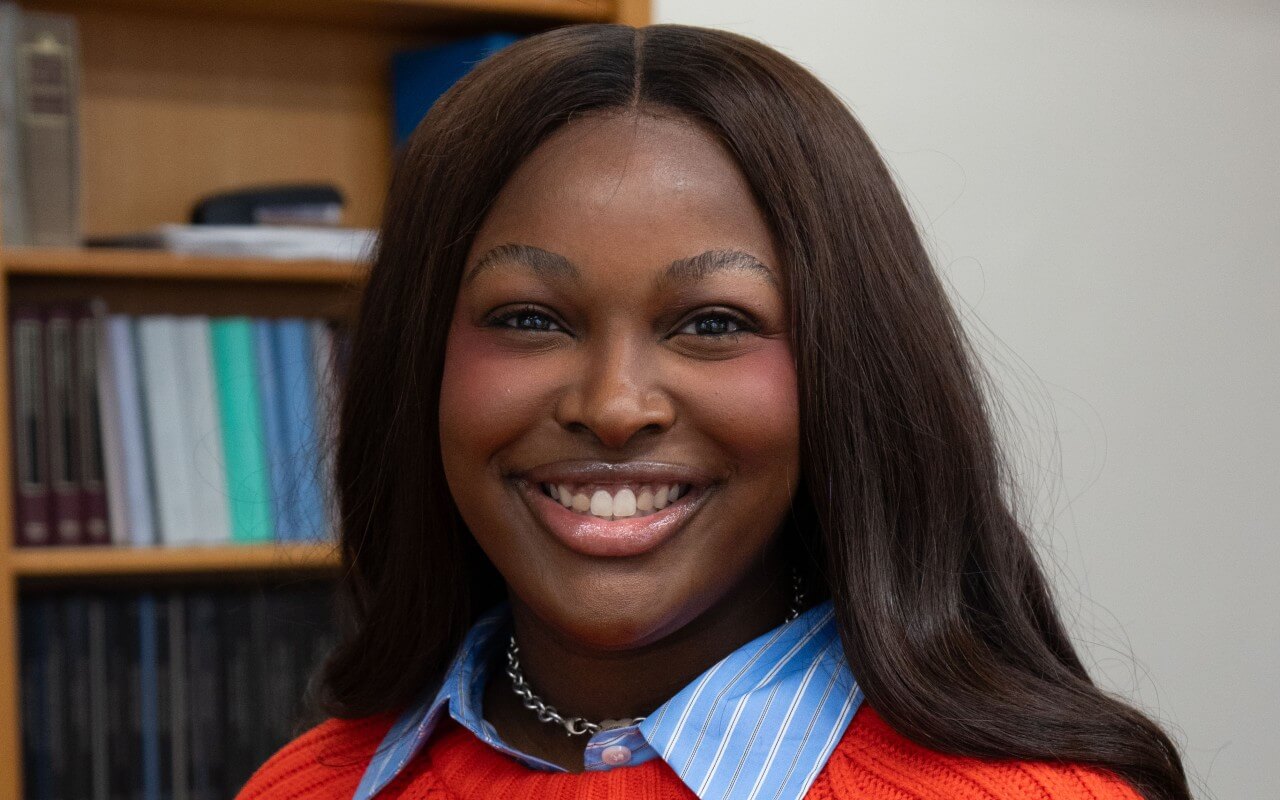
Alexandria Kirksey speaks with the calm confidence of someone who knows where she is headed. A master’s student in Roosevelt University’s Health Informatics program, she is focused on making health data clearer for patients and providers so people “have more control over their care, how they understand it and what's going on with themselves.”
That clarity of purpose grew from a family foundation of skilled work and steady care. Alexandria grew up in Chicago’s south suburbs, the daughter of a professional hairstylist and a ground attendant at O’Hare International Airport. Their dedication shaped her perspective on progress and pride. “My family did the best they could and now our best is better.” She is a first-generation college student who learned to navigate higher education on her own. “Since I'm the first to go, I'm kind of weaving my way through and learning my way through it.”
Before Roosevelt, Alexandria worked in diagnostics labs and saw how confusing results can be once they leave the lab and land in a patient portal. “I realized how hard that is, to organize those results, to portray those results, to receive those results, especially as a patient.” She wanted to build interfaces that make results understandable and collaborative, so it is not just “the doctor said” but “we agreed.”
Getting to graduate school took courage. She felt the weight of an undergraduate GPA that did not tell her whole story. What changed everything was the way Roosevelt listened. “Roosevelt saw me for me, instead of focusing on the challenges I faced earlier in my academic journey. We chose each other.” She was equally drawn to the program’s balance of technical depth and mission. “They had a good focus on the technical skills, but they also had a great emphasis on ethics and social justice. Everybody deserves equitable health care.”
Once enrolled, support became the throughline. The hybrid format let her keep working while learning. “They made sure that I was heard, that I was seen and that my life could fit learning.” She describes the experience as “accommodating and considerate.” Her favorite part is the faculty who invited her voice into the room. “I've grown some pretty good relationships with them, and I think that they're always open to hearing my opinions.”
One mentor stands out. “Dr Hayes, by far. She spoke life into me when she didn't know I needed it. She's always down to listen. She's always down to accommodate me, help me. She’s really mentored me.” Alexandria calls Director of Health Informatics Dr. Susan Hayes “a very pivotal person in this journey,” including helping her secure meaningful opportunities on and off campus.
That connection was forged through Alexandria’s proactivity. According to Dr. Hayes, "Alexandria sought me out. She came to the classroom and wanted to learn. Her work ethic and desire to learn more than the basic assignment drove her to excellence.” For Dr. Hayes, Alexandria wasn’t just a pupil, but a reflection of her own journey. “I saw many similarities in our stories: first-generation graduates, a passion for social justice in healthcare, desire to fix a broken healthcare delivery system.” She continues, “Alexandria has already ‘done better than best’ and the foundation she has achieved here at Roosevelt University will take her far in her professional career and life in general. She is a truly inspirational student to her fellow classmates, colleagues at the Washington Health Alliance and academic support staff."
Those tools are already translating to impact. Through an internship with the Washington Health Alliance, Alexandria works with hospital data to assess pricing “fairly and equitably,” and she feels prepared because of “the tools and skills that Roosevelt and the health informatics team helped gave me.” She also serves as a graduate assistant with the Student Success team, analyzing how students receive and resolve account holds so more classmates can stay on track. Working closely with her supervisor, Kelsey Lin has also been a meaningful part of Alexandria’s growth. “I love Kelsey. She's always wanting to ensure that students are aware of their accounts, aware of their success and the things that could stand in the way of it,” Alexandria says, adding that she is “pretty happy that I met her.”
According to Lin, Alexandria’s research is grounded in a clear commitment to equity. “Her desire to make sure everyone has an equitable experience has been apparent since our first meeting. I had suggested our “account holds” project to her, as higher education research suggests account holds can create inequitable experiences for first-generation college students.” That focus has shaped work that not only analyzes systems but actively seeks to make them more equitable for the students they serve. Lin continues, “No matter where her professional journey takes her, I think Alexandria’s skills and steady mindset will create lasting impacts on each place she goes, leaving them better than how they were before she arrived.”
Ask what comes next and her answer is steady. “I think that I can do anything after I graduate.” She is exploring clinical and pharmacy informatics, even the possibility of pharmacy school and building a patient-centered app. To students considering Roosevelt, her advice is simple and bold. “If you're thinking about it, I think you should start.”
Alexandria’s journey shows what happens when personal grit meets a community that sees you. Her mother’s craft, her father’s union strength and Roosevelt’s support helped her find her voice in data. As she says, “now our best is better.”