Master’s in Occupational Therapy, MSOT
Your Path to a Career That Makes a Difference
Become an occupational therapist who helps people live life to the fullest.
Roosevelt University's Master of Science in Occupational Therapy (MSOT) program prepares you to enter a rewarding healthcare profession focused on helping individuals achieve greater independence, confidence, and quality of life.
Designed for today's learners, our 2-year hybrid MSOT program combines the flexibility of online coursework with immersive, hands-on learning experiences at our Schaumburg campus. Through innovative instruction, clinical preparation, and meaningful engagement with faculty and peers, you'll build the knowledge and skills needed to become a compassionate and effective occupational therapy practitioner.
Occupational therapists make a lasting impact by helping people of all ages overcome challenges, adapt to life changes, recover from injury, and participate in the activities that matter most.
At Roosevelt, you'll be prepared to turn your passion for helping others into a meaningful career in healthcare—one that changes lives every day.
Admissions are open for fall semester entry only.
For more information, contact MSOT@roosevelt.edu.
MSOT Admission Events
MS Occupational Therapy Online Information Session
11:00 - 12:00pm
The Master of Science in Occupational Therapy (MSOT) program at Roosevelt University prepares diverse and compassionate occupational therapy practitioners who advance health, participation, and occupational justice. Guided by the dynamic interaction between person, occupation and environment, theory-driven learners actively engage in experiential education, the promotion of critical reasoning, collaborative teamwork, and reflection. Through rigorous academic study and evidence-informed practice, graduates are equipped to promote equitable access, dignity, and meaningful engagement in everyday life for people of all backgrounds across varied regions and practice settings.
Why choose Roosevelt for your MSOT degree?

Flexible. Supportive. Connected.
Roosevelt University’s Master’s in Occupational Therapy program offers a hybrid learning experience that combines online coursework with immersive in‑person sessions in Schaumburg. With minimal on‑campus requirements, small class sizes, and dedicated faculty support, students gain flexibility without sacrificing connection or community.

Low Residency MSOT Program Delivery
Roosevelt University’s full‑time, low‑residency MSOT program delivers approximately 70% of its coursework online, with the remaining 30% completed through three, week‑long, in‑person immersive experiences on our Schaumburg campus, along with Level II fieldwork to ensure robust, hands‑on clinical preparation.

Exceptional Value in a Prime Location
With competitive tuition, Roosevelt’s MSOT program offers outstanding value compared to nearby programs. The Schaumburg campus is located minutes from O’Hare International Airport and surrounded by hotels within walking distance, making immersive sessions convenient for out‑of‑town students.

Occupational Therapy Career Outlook
Occupational therapy is a high‑demand healthcare profession with excellent long‑term outlook. According to the U.S. Bureau of Labor Statistics, employment of occupational therapists is projected to grow 14% from 2024–2034, much faster than the average for all occupations. The median annual salary is $98,340, with opportunities across healthcare, schools, community settings, and emerging practice areas.

Learn in Brand-New OT Labs
Students learn in state‑of‑the‑art occupational therapy labs, benefit from small class sizes, and receive personalized faculty support in a collaborative, student‑centered learning environment. The OT space on campus includes an Activities of Daily Living (ADL) Apartment, Pediatrics & Sensory Lab, Rehabilitation Lab, and Human Movement Lab.
MSOT Direct Costs for Attendance: Cohort entering Fall 2026
| Cost Category | Year 1 (Fall / Spring / Summer) | Year 2 (Fall / Spring) |
|---|---|---|
| *Tuition ($900 per credit hour) | $34,200 (38 credit hours) | $33,300 (37 credit hours) |
| **Fees | ||
| Student Health Fee | $54 | $54 |
| Student Activity Fee | $50 | $50 |
| Graduate General Fee | $495 | $330 |
| Book Fee | $808 | $309 |
| Distance Program Fee | — | — |
| Regalia Rental Fee | — | $134 |
| Yearly Total | $35,607 | $34,177 |
| Total Direct Cost | $69,784 | |
*Cohort Pricing locks in tuition for the 2-year cycle.
**University fees subject to annual increases. Student Health Fee $27.06/semester, Student Activity fee $25/semester. Graduate General Fee $165/semester including summer, Book fee $23.75 per credit hour in Year 1 for 34 credits, and in Year 2 for 13 credits. Get detailed information on University Tuition and Fees.
Additional costs that students are responsible for include: student loan fees (if applicable), annual membership to AOTA (required while enrolled in program), transportation and hotel (if needed) for required on-campus experiences, and transportation, parking, and housing/lodging (if needed) for Level II fieldwork experiences.
What are the residency requirements for Roosevelt's MSOT program?
The MSOT program is a low‑residency, hybrid program with approximately 70% of coursework delivered online. Students are required to attend three one‑week immersive, in‑person sessions on the Schaumburg campus, while all other coursework can be completed remotely.
What clinical experiences are included in the MSOT degree?
Students complete three Level I fieldwork experiences integrated into coursework and two full‑time Level II fieldwork experiences totaling 24 weeks. Level II fieldwork is completed in person, typically arranged within or near the student’s geographic area, and is required for graduation and NBCOT exam eligibility.
Where do occupational therapists work?
Occupational therapists work in hospitals, outpatient clinics, schools, home health care, skilled nursing facilities, community centers, mental health facilities, and in workplace or ergonomic consulting settings. They can also specialize in areas like pediatrics, geriatrics, hand therapy, and mental health rehabilitation.
What degree do you need for occupational therapy?
To become an occupational therapist, you’ll first need an undergraduate degree in a related field such as psychology, biology, kinesiology, health sciences, or sociology, which provides the foundational coursework for admission into a graduate program. After that, you must earn a Master’s in Occupational Therapy (MSOT) to practice; a doctorate (OTD) is optional but not required for entry-level positions.
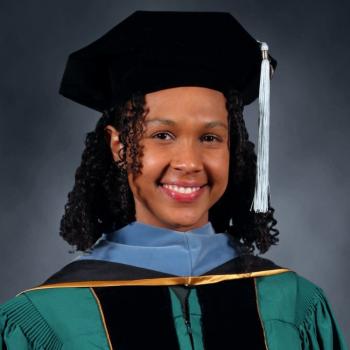
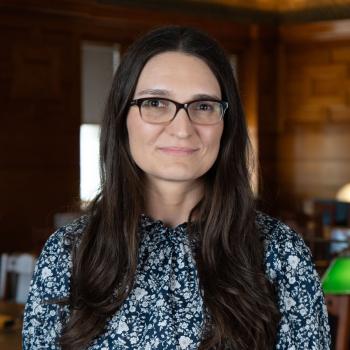
Meet your Occupational Therapy Faculty & Staff






The entry-level occupational therapy master's degree program has been granted Candidacy Status by the Accreditation Council for Occupational Therapy Education (ACOTE) of the American Occupational Therapy Association (AOTA), located at 7501 Wisconsin Avenue, Suite 510E, Bethesda, MD 20814. ACOTE's telephone number is (301) 652-AOTA and its web address is www.acoteonline.org.
The program must be granted Accreditation Status before its graduates will be eligible to sit for the national certification examination for the occupational therapist administered by the National Board for Certification in Occupational Therapy (NBCOT). After successful completion of this exam, the individual will be an Occupational Therapist, Registered (OTR). In addition, all states require licensure to practice. Note that a felony conviction may affect a graduate's ability to sit for the NBCOT certification examination or attain state licensure.
ACOTE Accreditation Timeline
- Current status: Candidacy
- Initial on-site evaluation: Anticipated February-March 2028
- Accreditation decision: Anticipated April 2028, prior to the graduation of the first cohort