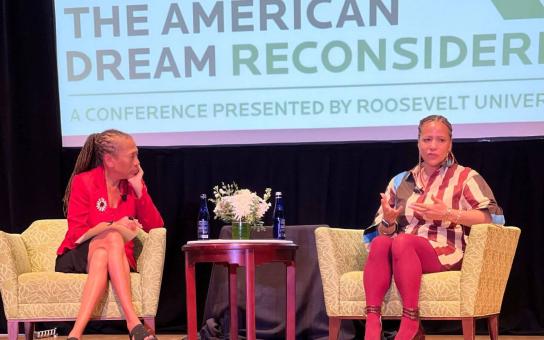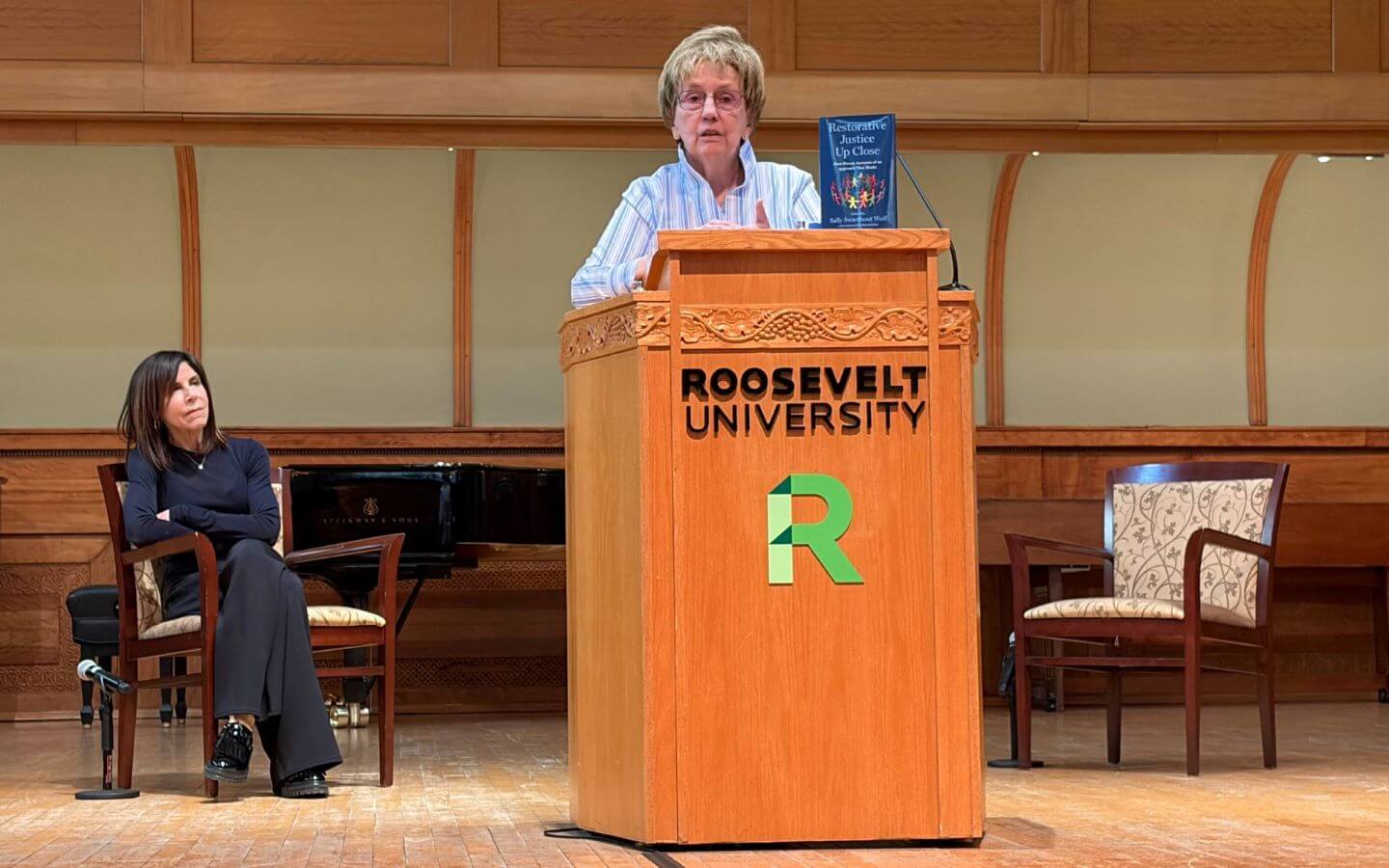
Roosevelt University continued its commitment to social justice and community engagement when it hosted the annual Matthew Freeman Lecture this Tuesday. Held in Ganz Hall, the event honored the memory of Roosevelt alumnus Matthew Freeman, whose passion for social justice informs the lecture’s choice of subject. This year’s lecture focused on restorative justice and its ability to deter criminal activity.
Already emphasized by Roosevelt’s Mansfield Institute for Social Justice and its Sociology curriculum, restorative justice is the practice of bringing together offenders, victims and the community impacted by crime to create dialogue and emphasize healing. In contrast to a criminal justice system that emphasizes punishment and isolation, restorative justice provides every person impacted by crime an opportunity for healing, with the intent to reduce repeat offenders.
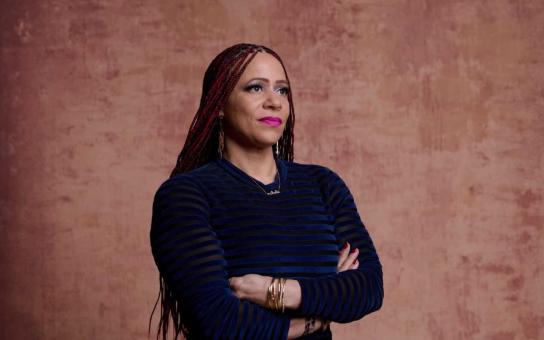
This year’s guests were Sally Swarthout Wolf and Nancy Michaels, who both have extensive experience in restorative justice. Michaels (BA ’07 and MA ’12) is a Roosevelt alumna and co-executive director of Reimagine Justice Illinois, which researches how restorative justice can impact racial and gender equity. Swarthout Wolf has over 20 years of restorative justice experience as the former director of Ford County Probation and Court Services, and her book Restorative Justice Up Close: First-Person Accounts of an Approach That Works is a compilation of dialogues that explores how human empathy results in lower recidivism.
Together, the pair discussed how restorative justice can create less resentment from victims, increase empathy for perpetrators and allow communities to welcome individuals back into civilian society. They also touched on how proactive restorative justice like connecting at-risk youth with current incarcerated individuals reduces harmful behavior in the future.
“This practice is all about viewing other people as multi-dimensional and worthy of redemption, not just the cold facts from their criminal record,” said Swarthout Wolf. “We’re seeing genuine results of these methods from this century and hope that more criminal systems in the United States see how effective this is.”
Roosevelt will continue to welcome social justice professionals during the upcoming Mansfield Lecture on April 7, which will focus on immigrant and refugee rights.